Quick answer
Start here
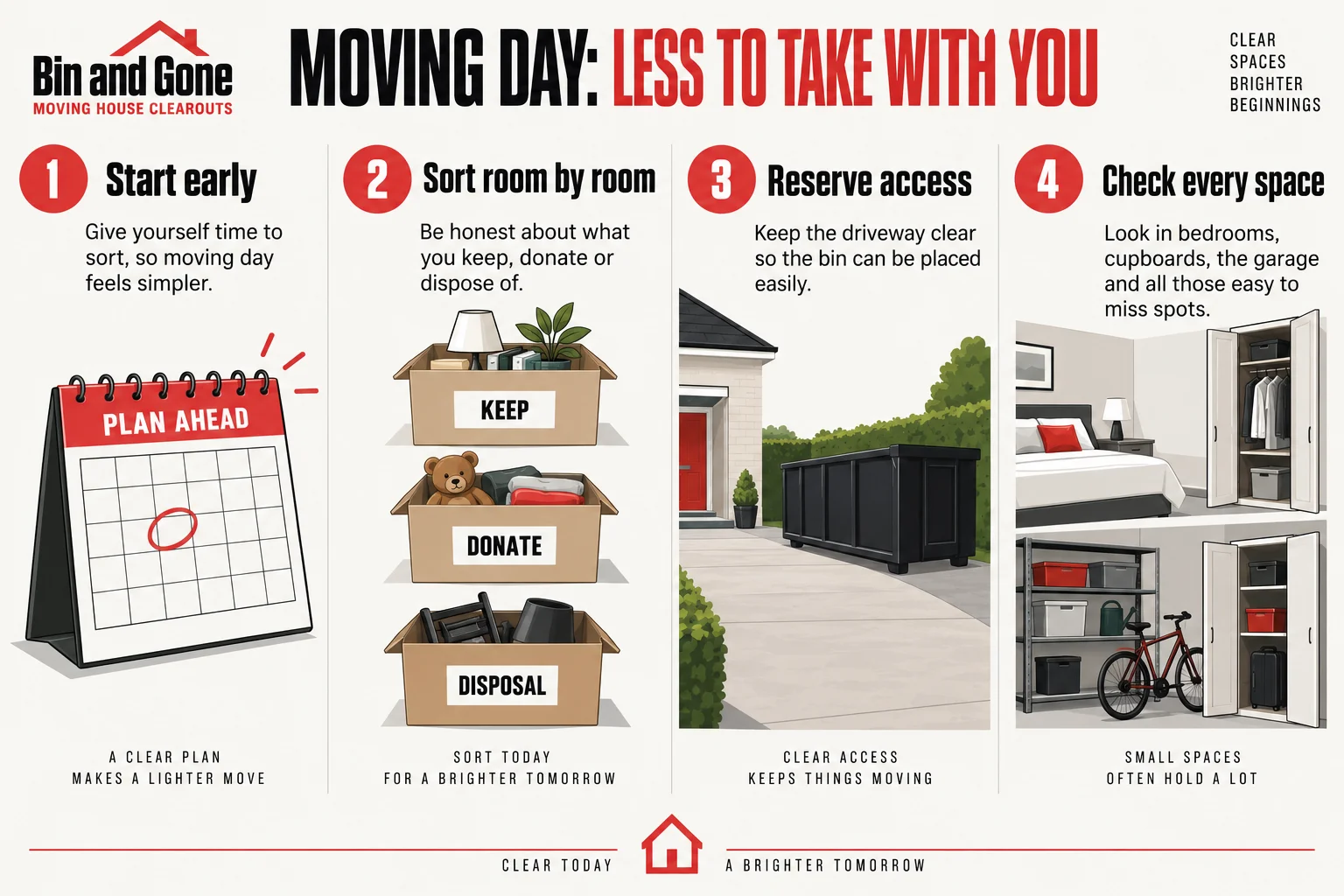
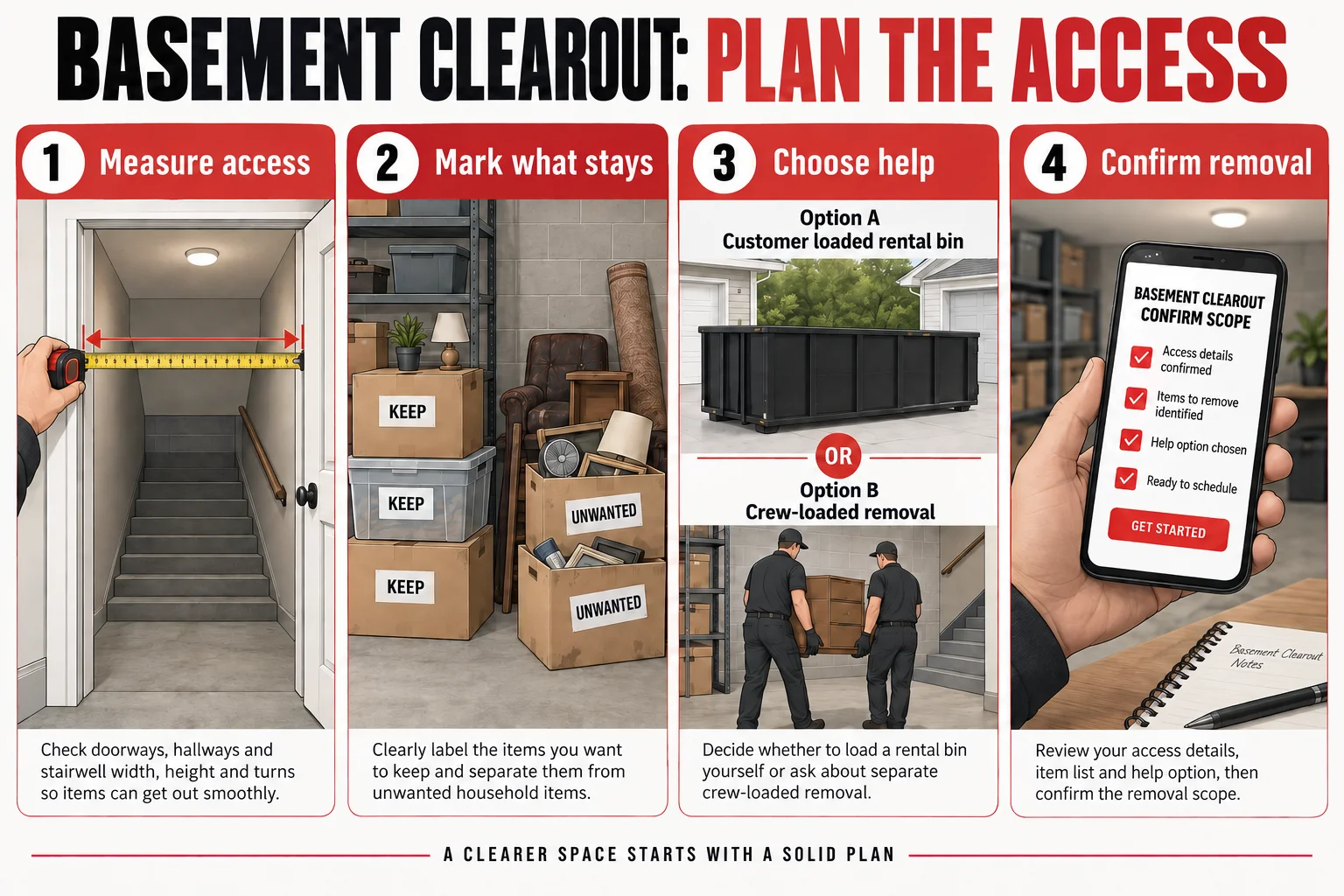
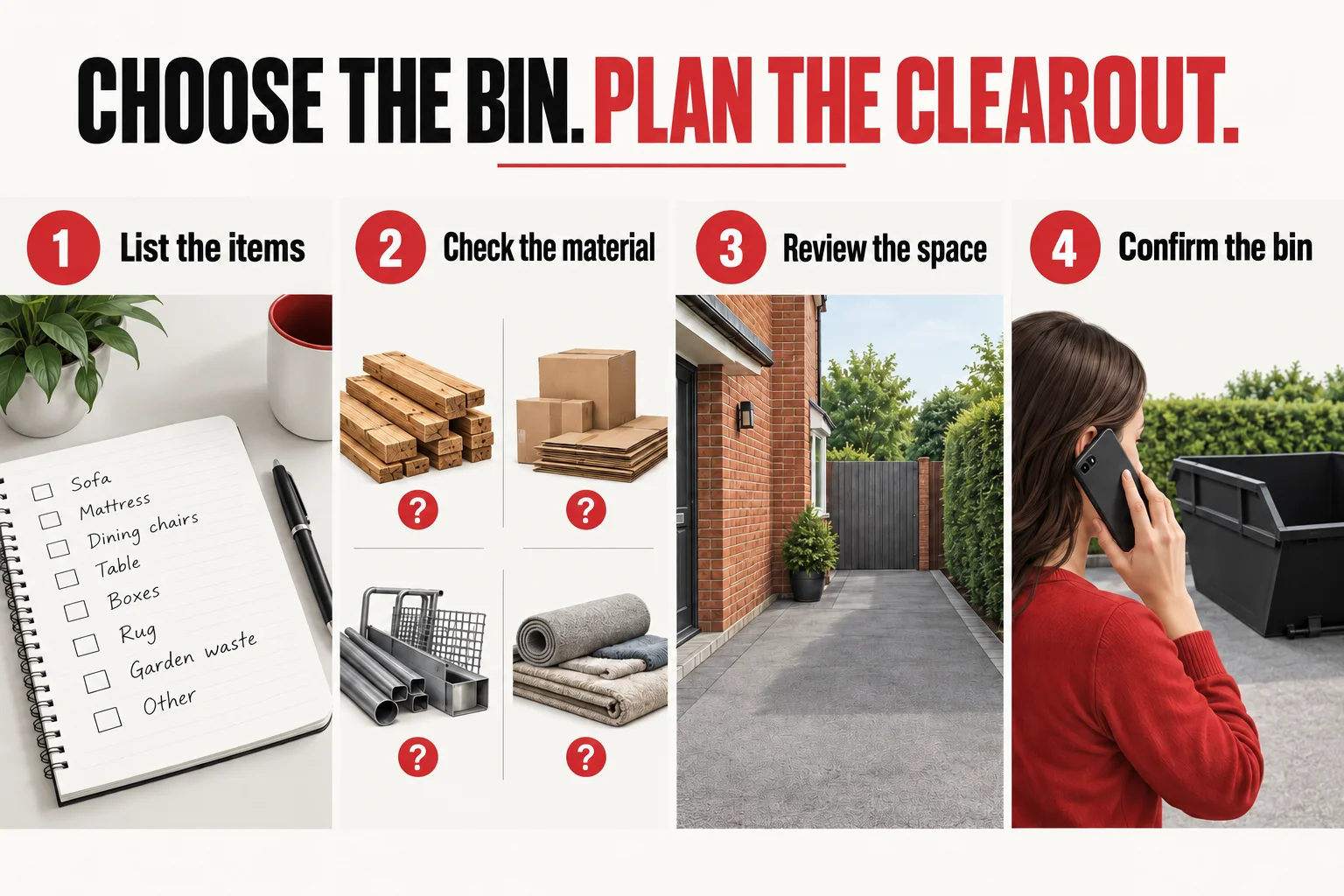
Start with the space you want back, then separate belongings, reusable items and special waste before choosing a bin. A rental works best when you have a clear loading route and people who can safely load the approved items over the agreed rental period.
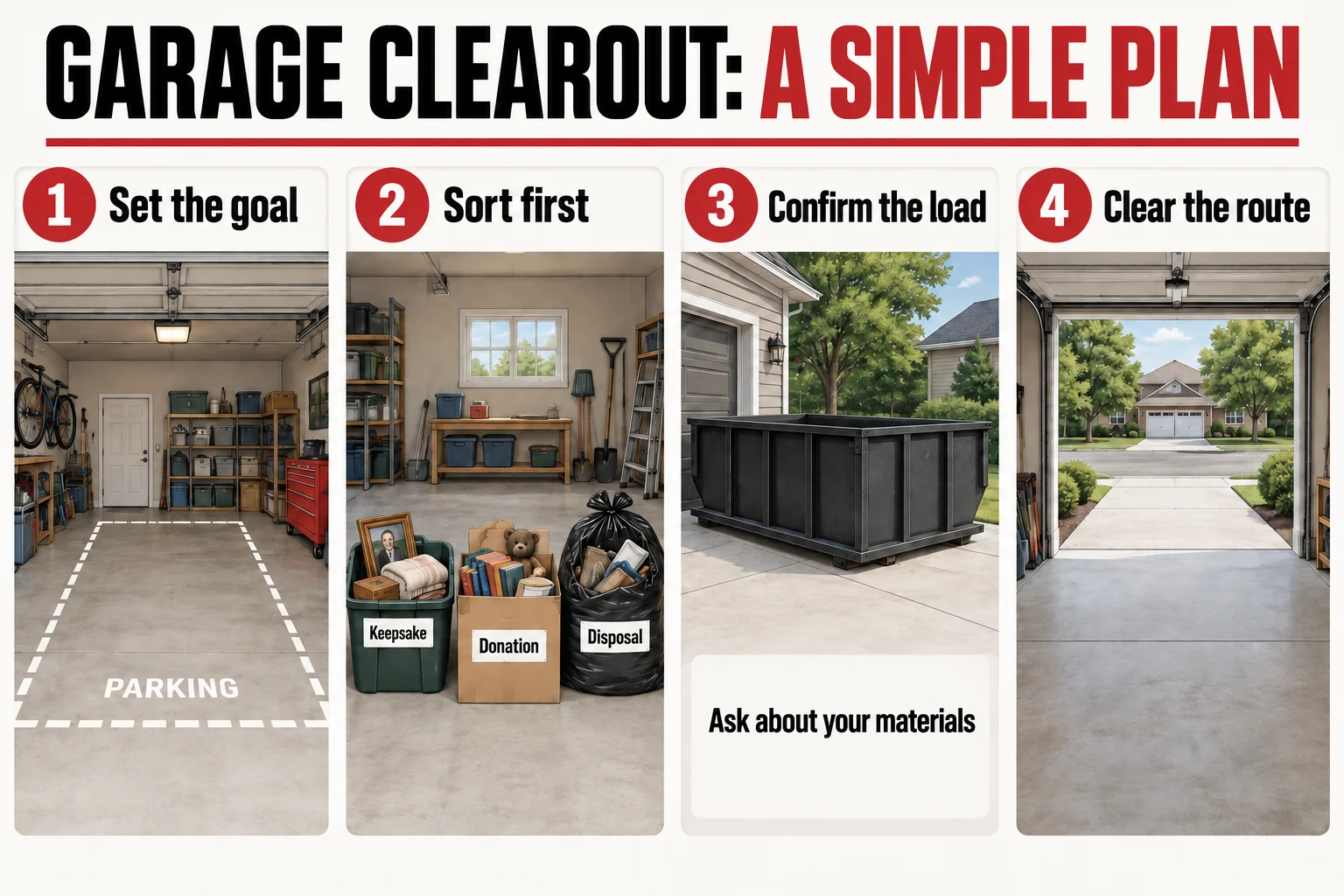
Read the infographic steps in text
- Set the goal
Choose the space you want back.
- Sort first
Keep, reuse and special waste stay separate.
- Confirm the load
Describe items, materials and weight concerns.
- Clear the route
Agree placement and protect everyday access.
Choose an outcome before opening every box
A garage clearout can mean making room for one car, opening a walkway or clearing a workbench. Pick one outcome and measure the space it needs. This gives you a useful stopping point and helps you avoid moving the same clutter between corners.
Photograph the garage before sorting. Make a quick list of bulky objects, loose bags, shelving and items you cannot identify. Leave enough space to move around safely. If the garage has become difficult to enter, start with the doorway and a small working area rather than pulling everything onto the driveway at once.
Create four clearly labelled zones
Use separate areas for keep, reuse, approved disposal and needs checking. Put the keep zone furthest from the loading route. A label is more reliable than an instruction such as 'everything on the left can go', especially when several people are helping.
Before treating usable tools, sports equipment or furniture as waste, decide whether someone actually wants them. Durham Region's Reduce and Reuse guidance points residents toward repair, resale and donation resources. Contact the recipient first and set a practical collection date. A donation pile with no confirmed destination can occupy the garage for another month.
Give garage chemicals their own plan
Durham Region lists paint, motor oil, batteries, propane tanks and household chemicals as household hazardous waste. Keep these out of the rental load. Its Clarington Household Special Waste Depot accepts household hazardous waste only, so it is not a general garage-junk drop-off. Check the Region's current instructions and limits before travelling.
A leaking or unlabelled container belongs in the needs-checking category. Do not pour contents together to make space. Bin and Gone does not accept chemicals or hazardous materials. Tell the team about unusual objects before you arrange a bin, including equipment that may contain fuel or other fluids.
Describe what remains, not the size of the garage
A single-car garage full of loose cardboard is different from the same space containing books, broken furniture and dense materials. List the actual items and mention anything unusually heavy. Photos of the sorted disposal group are more useful than one image of a closed garage door.
Confirm the suitable bin, approved materials and loading limits with Bin and Gone. Do not use an illustrated bin profile as a certified capacity. If you discover rubble, soil or renovation material behind the household clutter, mention it separately. A rental request should describe the whole proposed load before delivery.
Plan loading time and driveway access together
For customer-loaded rental, Bin and Gone delivers and collects the bin while you load the approved items. The approved package includes seven days, delivery, pickup and fuel. Arrange your helpers around the agreed dates, and ask about any extension before assuming one is available.
Explain driveway layout, parked vehicles, slopes and the space needed for household access. Agree placement with the team before delivery. Keep items you still use accessible, such as bicycles, the freezer or your snow-clearing equipment. If carrying and loading the contents is beyond what you can safely manage, ask separately about crew-loaded removal in Orono, Newcastle, Bowmanville or Courtice. Oshawa service is customer-loaded rental only.
Before-delivery checklist
Use this short check before you confirm the rental details:
- Choose the car space, walkway or work area you want to reclaim.
- Mark belongings that must stay and secure small valuables.
- Confirm donation or resale arrangements for reusable items.
- Separate chemicals and other items needing special handling.
- Send an item list and note heavy or uncertain materials.
- Discuss bin placement, access and loading limits with the team.
- Confirm dates and who will do the loading.
- Check the garage again before the agreed pickup.
Common questions
Should I rent a bin before sorting the garage?
Make the main keep and reuse decisions first. You do not need to finish every shelf, but a realistic disposal list helps the team assess the bin and materials. It also keeps usable belongings from entering the load by mistake.
Can someone load the rental bin for me?
The rental is customer-loaded. Crew-loaded removal is a separate service and estimate in the core service areas. Describe what you need help carrying before choosing either option.
What if the clearout takes longer than seven days?
Contact Bin and Gone before the agreed pickup to discuss options. Extra days, charges and availability need confirmation; the website does not establish an extension policy.
Sources and further reading
Official guidance provides planning context. It does not replace the materials, access, loading and booking details agreed with Bin and Gone.
- Durham Region: Reduce and Reuse
Regional guidance and resources for repair, resale and donation before disposal.
- Durham Region: Waste Management Facilities
Household hazardous waste categories, instruction not to mix substances, and the Clarington depot's hazardous-waste-only scope.