Quick answer
Start here
Choose a bin by reviewing the actual removal pile, its material mix and the space available for delivery. Bin and Gone's five profile illustrations are approximate comparisons, not certified usable capacities. Send item and driveway photos, then confirm the available bin, loading limits and placement with the team.
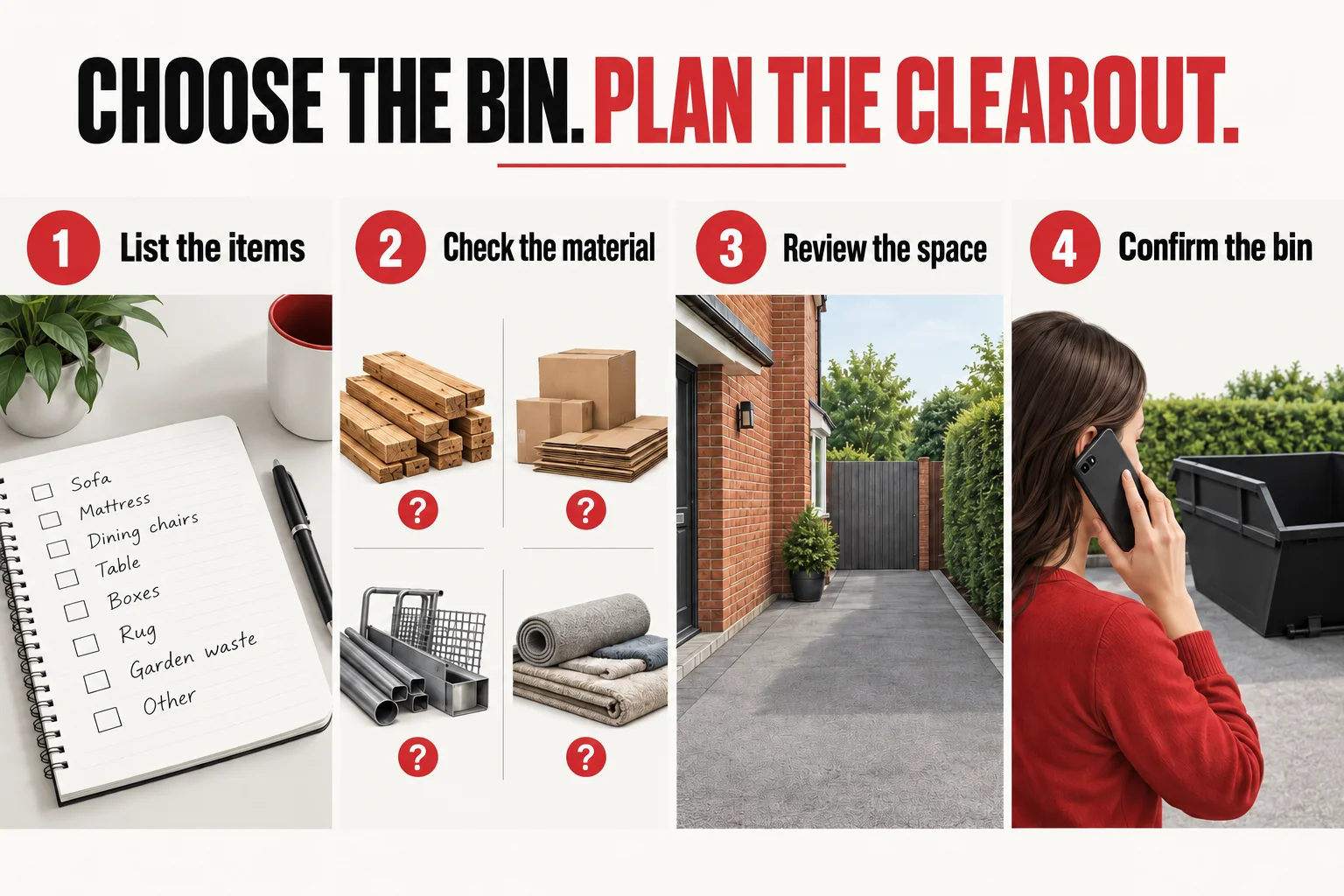
Read the infographic steps in text
- List the items
Count the furniture and describe the loose material.
- Check the material
Separate heavy, unusual and excluded items.
- Review the space
Compare illustrated profiles and photograph access.
- Confirm the bin
Agree actual dimensions, limits and dates with the team.
Start with the removal pile
Two garages of the same size can need very different removal plans. One may contain a few empty boxes; another may hold cabinets, furniture and years of stored possessions. A room count is useful background, but an item list gives a clearer picture of the space you may need.
Walk through the project before requesting a bin. List large pieces separately from bags and loose material. Photograph the pile from several angles, including items hidden behind the front row. Label each group when several rooms are involved.
- Count sofas, chairs, mattresses, tables and shelving separately.
- Describe bags, boxes and loose items without assuming their weight.
- Measure unusually long or bulky items.
- Identify anything still awaiting a keep-or-remove decision.
Sort before you compare sizes
Set aside possessions you are keeping and items a donation recipient has agreed to accept. This makes the rental discussion more accurate. Confirm donation arrangements yourself; the bin rental does not include a donation pickup service.
If only a small number of bulky items remain, review municipal collection options too. Durham Region says Clarington furniture and large-item collection is by appointment, with up to two items per collection. Oshawa handles its own large-item service. Check eligibility and current rules directly before deciding which route fits your timing.
Use the five profiles as comparisons
The website illustrates low profile, tall and narrow, yellow, standard and long standard bins. Calculations based on the supplied measurements, interpreted as decimal feet, are approximately 5.8, 14.4, 14.8, 15.6 and 16.3 cubic yards respectively. These numbers describe calculated comparisons, not certified usable capacities.
Actual dimensions, usable space and loading limits require confirmation. A diagram, a person drawn beside a bin or a '14 yard' marking in a photograph cannot establish the exact amount that will fit. Ask which physical bin is available and suitable before planning around a particular illustrated profile.
Think about shape as well as volume
Record the length of awkward furniture and whether it can safely be separated into smaller parts. A total volume calculation cannot prove that a long item will pass through the actual bin opening or fit within its loading limit.
Describe your loading plan, including whether you have suitable help and a clear route from the house. Ask about the actual bin's loading access. A lower illustrated wall may look convenient, but the team must confirm the appropriate equipment and loading method for your project.
A bigger illustration is not a heavier-load approval
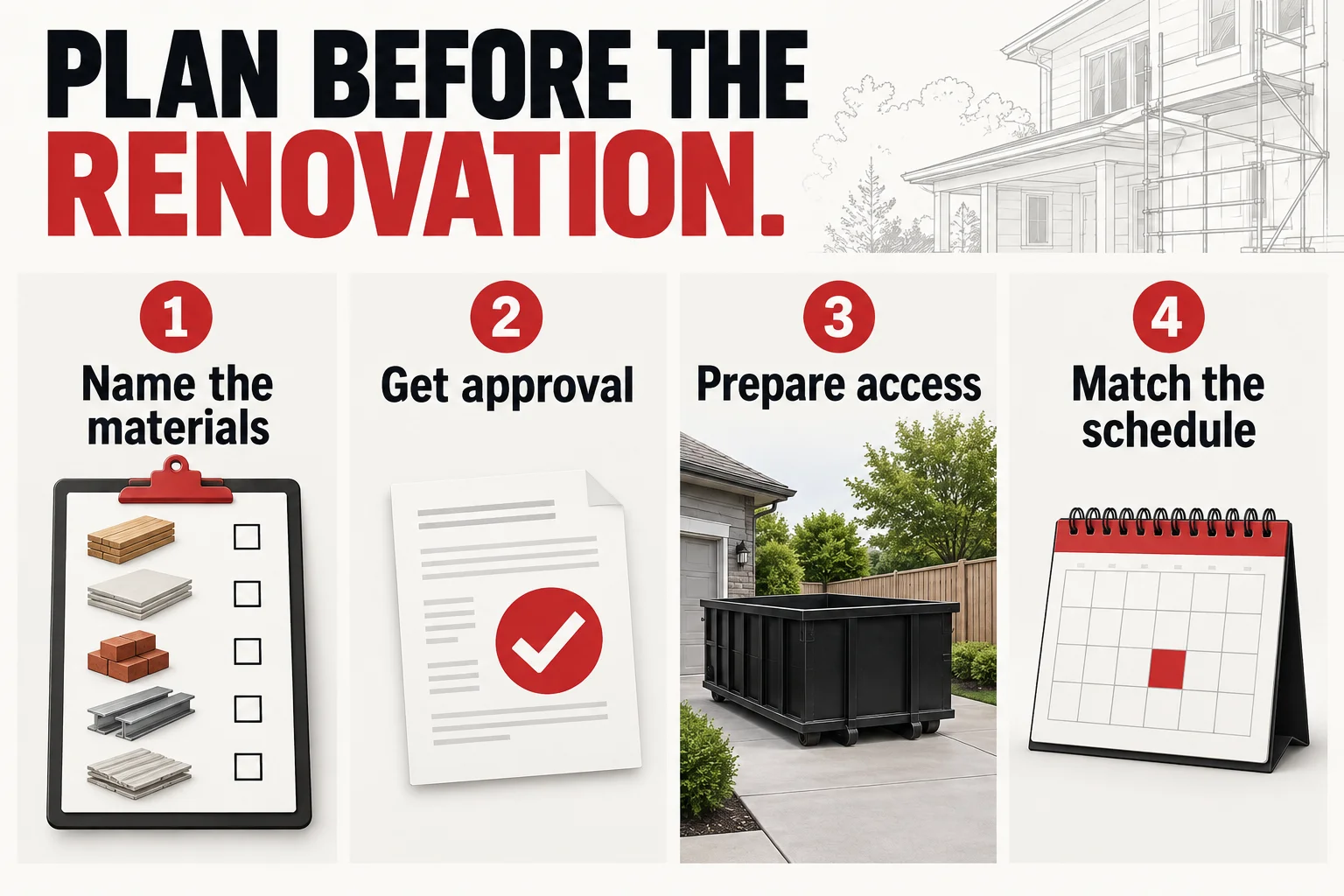
Space and weight need separate review. A household clearout may become a much heavier project if leftover renovation materials are added. Keep that change visible in the request instead of placing everything under the label 'garage junk'. The team needs the material details to assess the suitable rental.
Acceptance is case by case. Cinder blocks, chemicals and hazardous materials are excluded. Do not add concrete or another dense material without explicit approval. A bin with spare room is still subject to its agreed material and loading limits.
Include access in the size decision
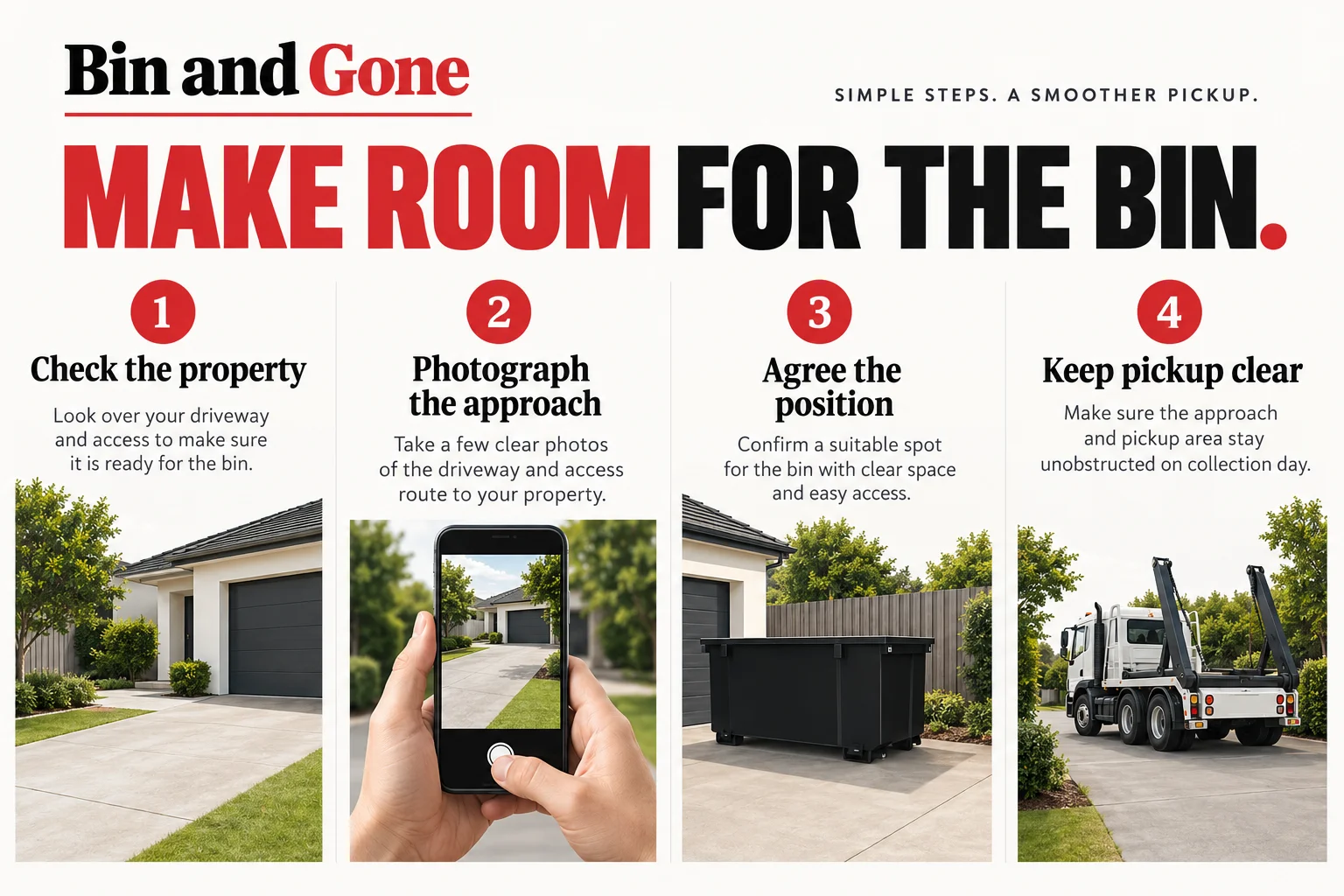
Photograph the intended placement and the full approach from the road. Mention parked vehicles, gates, overhead branches, a slope or a shared driveway. The bin footprint is only part of the space needed for delivery and collection. Do not invent clearance measurements from a diagram.
Send the item list, town, photos and preferred dates together. The team reviews each rental project before confirming a suitable bin. If the item list grows, ask again rather than relying on the original assessment.
Common questions
Can a room count tell me the exact bin size?
No. The same room can hold very different quantities and shapes of material. An item list and several clear photos give the team better information.
Are the illustrated cubic-yard figures exact?
No. They are approximate calculations using supplied measurements interpreted as decimal feet. Actual bin dimensions, usable capacity and loading limits need confirmation.
Will a larger bin let me load any material?
No. Material approval and loading limits apply separately from illustrated volume. Cinder blocks, chemicals and hazardous materials are excluded, and concrete is not assumed acceptable.
What if I cannot do the loading?
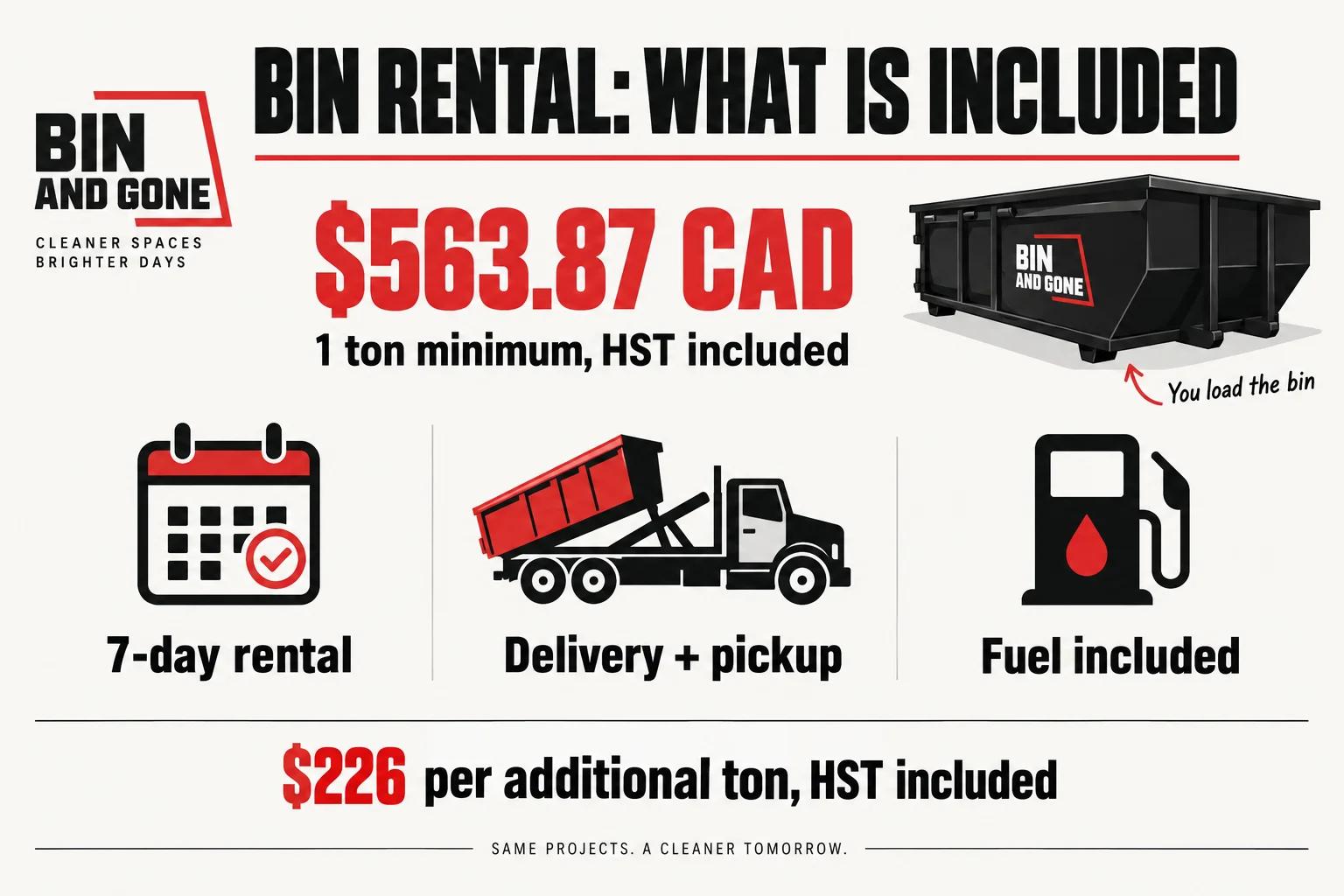
Discuss crew-loaded removal separately in Orono, Newcastle, Bowmanville or Courtice. Oshawa is customer-loaded bin rental only, and loading labour is not included in the rental package.
Sources and further reading
Official guidance provides planning context. It does not replace the materials, access, loading and booking details agreed with Bin and Gone.
- Durham Region: Furniture and Large Item Collection
Clarington appointment collection, the two-item collection limit and Oshawa's separate municipal large-item service.