Quick answer
Start here
For a basement, the main decision is how the contents will reach the driveway. Check the stairs, turns and doorways before choosing customer-loaded rental or asking for a separate crew-removal estimate. Heavy items and uncertain materials need review before either service is arranged.
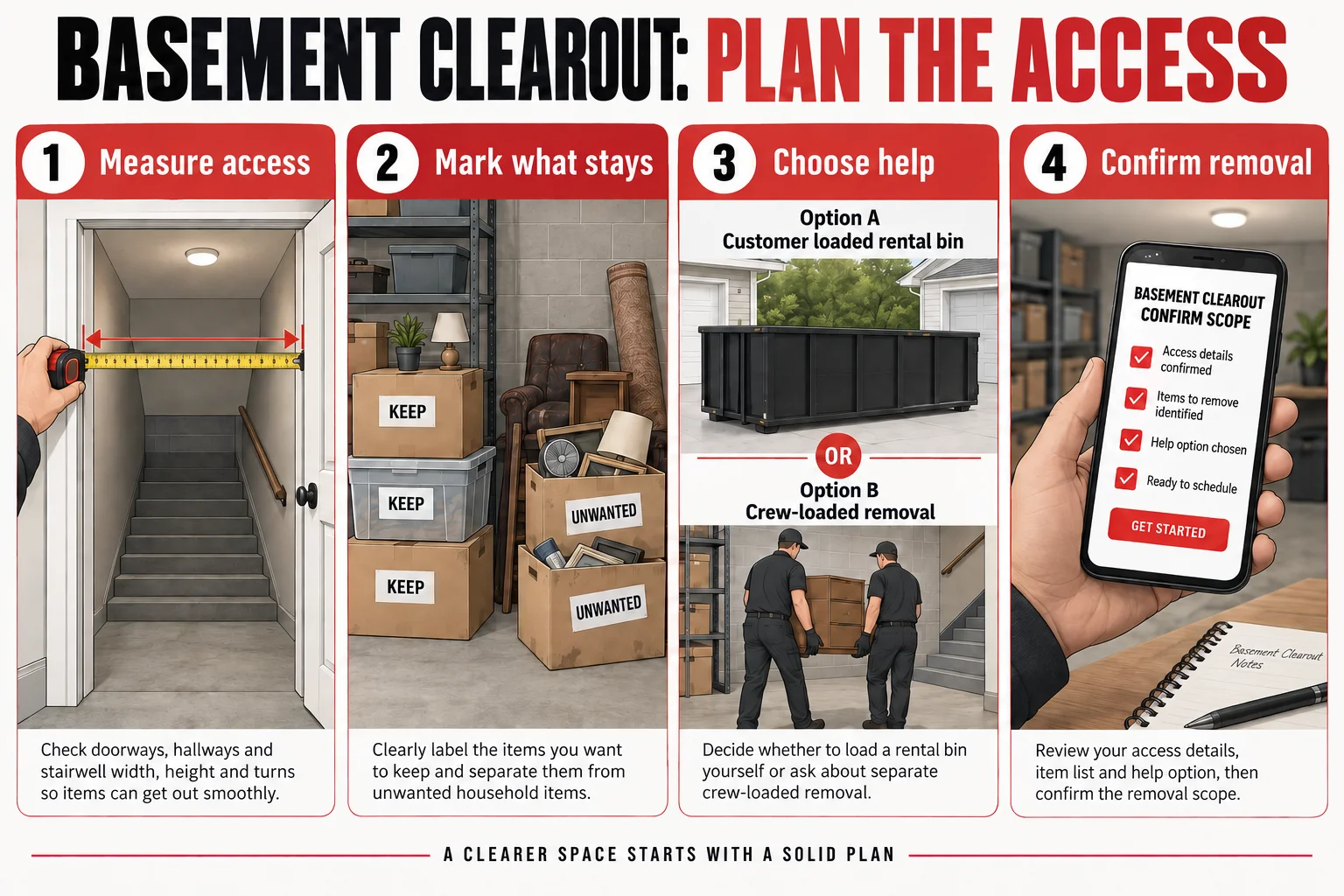
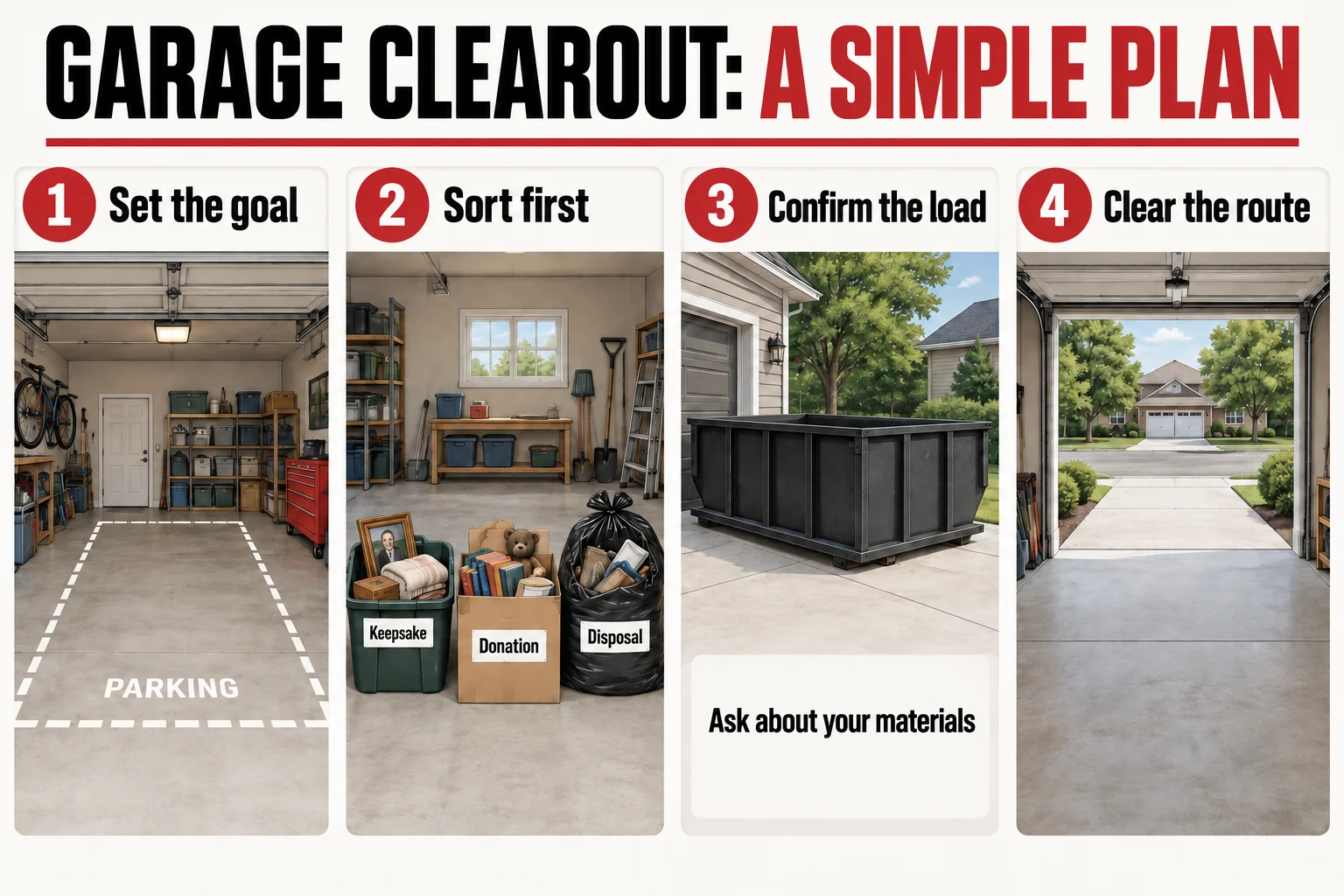
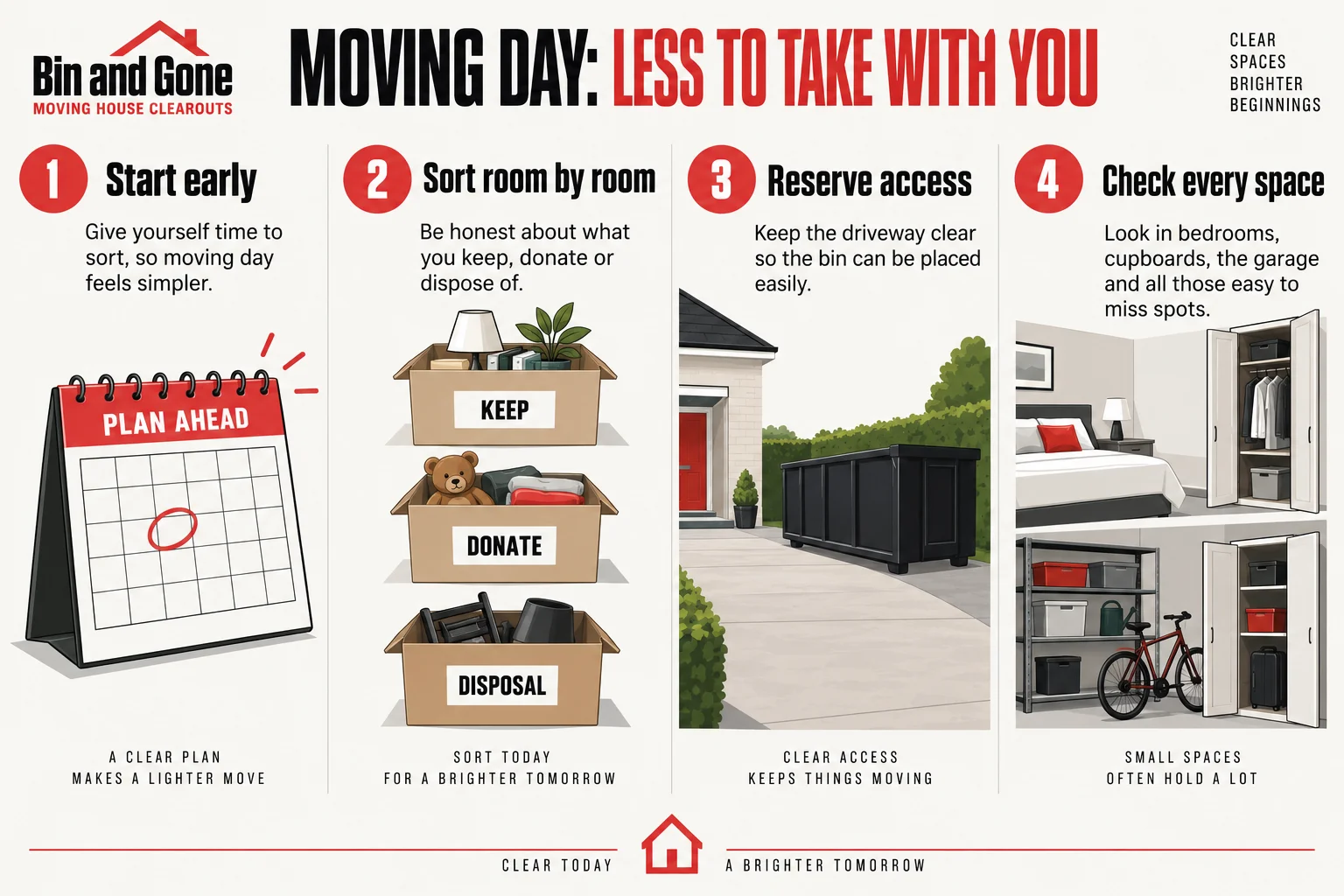
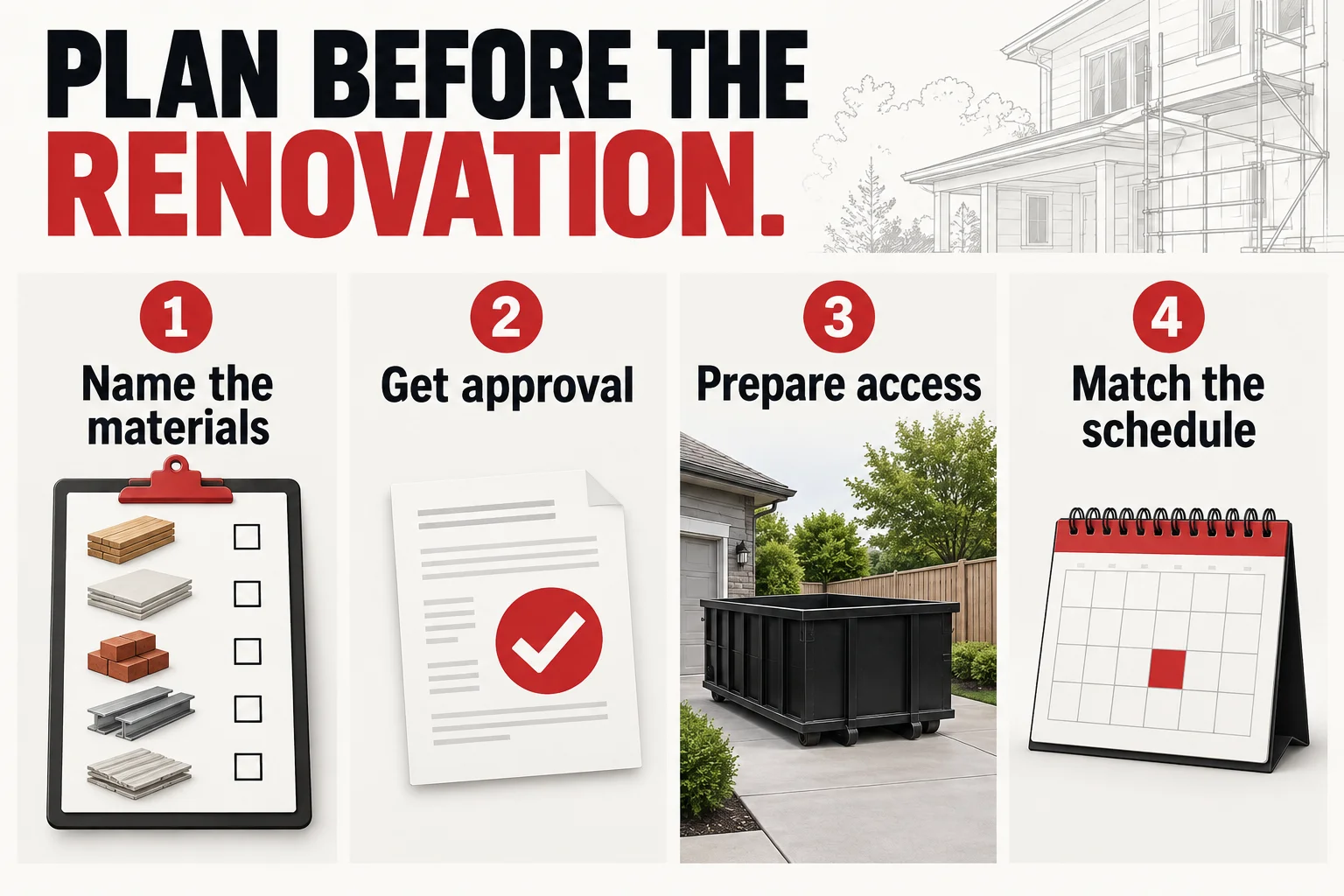
Read the infographic steps in text
- Measure access
Record stairs, turns and door openings.
- Mark what stays
Protect storage, documents and working equipment.
- Choose help
Decide who can safely carry each item.
- Confirm removal
Agree scope, materials, dates and placement.
Start with the route, not the pile
A basement sofa can look manageable until it reaches a narrow landing. Walk the full route from the room to the outside door. Note the staircase width, low ceilings, turns, handrails and doors along the way. Photograph the route as well as the objects.
Record the dimensions of the largest pieces and the tightest openings. Explain whether there is a walkout entrance or whether everything must travel through the main floor. These details help a crew assess carrying access and help you judge whether a rental is practical for your own helpers. Do not assume an item will fit because it entered the home years ago.
Decide who can carry each group of items
A customer-loaded bin can suit a gradual clearout of approved household contents when you have enough time and suitable help. You remain responsible for moving items out of the basement and into the bin. Make that carrying work part of the plan, rather than treating delivery as the solution to every item.
For awkward furniture, appliances or a clearout you cannot manage yourself, ask about crew-loaded removal and describe the access. It is a separate service with its own estimate. Bin and Gone's core areas are Orono, Newcastle, Bowmanville and Courtice. Oshawa is offered for customer-loaded bin rental only, so do not assume basement carrying is available there.
Protect belongings and working equipment
Start with shelves or one room and label what stays. Set aside family photos, documents, spare keys and small valuables before boxes leave the basement. Give everyone helping the same list of approved disposal items. A box beside unwanted furniture is not automatically unwanted too.
Keep the route clear and preserve access to household equipment. Describe any appliance needing disconnection before the work is assessed. Sorting household contents does not mean disconnecting wiring, plumbing or fuel lines, removing fixed shelving, or tearing out a finished basement. Discuss those tasks individually instead of folding them into a standard clearout request.
Distinguish storage clutter from water-damaged contents
If the basement has standing water, sewage damage or suspected contamination, pause ordinary clearout planning and get appropriate guidance first. Durham Region warns that flood contaminants and contact between water and electrical equipment can be dangerous. Its basement-flooding information is a separate resource from a household-junk checklist.
Tell Bin and Gone about damaged or contaminated items before asking for removal. Do not present a bin rental or a cleanout as mould remediation, flood restoration or hazardous-waste treatment. Chemicals and unknown containers also need a separate plan. Item acceptance depends on what the material is and whether it can be handled and transported safely.
Make the loading plan realistic
Describe books, bags, furniture and any dense material separately. Several small boxes can add substantial weight even when they take little space. Confirm materials and loading limits with the team before packing the bin. The illustrated profiles on the website do not establish usable volume or safe weight for your specific load.
Choose dates after the major sorting decisions are made. Rental includes seven days, delivery, pickup and fuel; loading labour is separate. Avoid scheduling the entire basement for the last evening before pickup. Leave time to check the rooms, move belongings back into useful storage and contact the team if the proposed load changes.
A basement assessment checklist
Have these details ready when you discuss the project:
- Community and the preferred clearout dates.
- Walkout entrance or interior stairs, with route photos.
- Largest furniture dimensions and tight turns.
- A list showing what stays and what may leave.
- Heavy items, appliances and any disconnection questions.
- Water damage, contamination or uncertain materials.
- Who will carry and load if choosing rental.
- Driveway access and proposed bin placement.
Common questions
Does bin rental include carrying items upstairs?
No. The homeowner loads the rental bin. Ask for a separate crew-removal assessment if you need carrying help in a core service area, and include photos of the stairs and doorways.
Should I move a heavy appliance to the driveway first?
Describe its location, dimensions and connection status before moving it. Do not move an item you cannot handle safely. The team needs to review the appliance and carrying route before confirming a suitable service.
Can I include renovation debris in a basement clearout?
List it separately from household contents and identify the materials. Acceptance and weight limits require confirmation. A general storage clearout does not establish approval for demolition or unknown building materials.
Sources and further reading
Official guidance provides planning context. It does not replace the materials, access, loading and booking details agreed with Bin and Gone.
- Durham Region: Basement Flooding
Flood contamination and electrical hazards require attention before ordinary basement clearing.
- Durham Region: Waste Management Facilities
Household hazardous waste requires a separate disposal route from general household garbage.