Quick answer
Start here
An estate clearout should start with authority and a protected inventory, followed by an approved disposal list. Give relatives time for agreed decisions and arrange removal only for contents that have been released. Choose customer-loaded rental or a separate crew assessment around the carrying work and access.
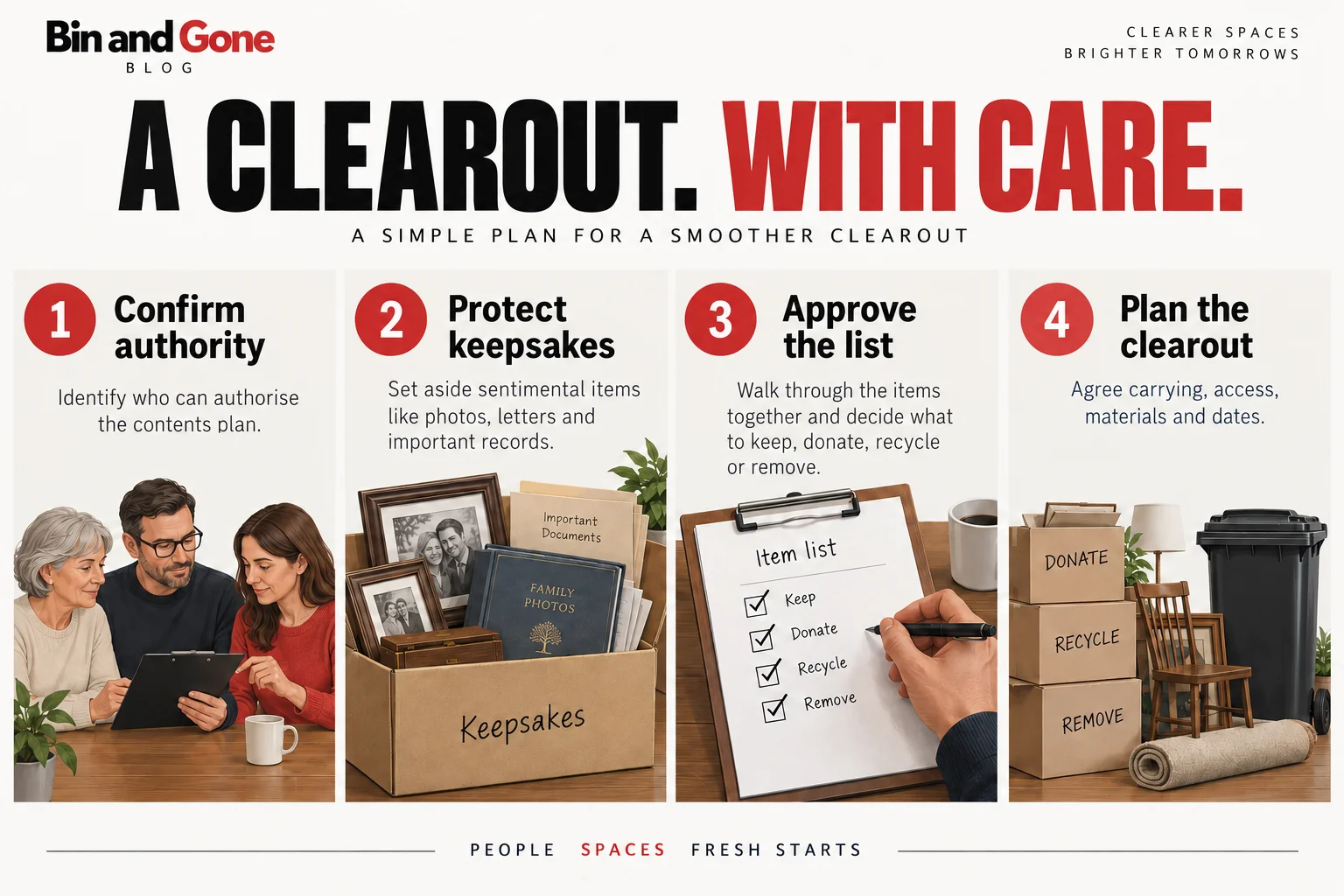
Read the infographic steps in text
- Confirm authority
Identify who can approve the contents plan.
- Protect keepsakes
Set aside records and personal belongings.
- Approve the list
Resolve uncertain items before disposal.
- Plan the clearout
Agree carrying, access, materials and dates.
Confirm who can approve the contents plan
Before anyone fills a bin, identify who is responsible for approving the removal or donation of belongings. Ontario's estate guidance explains that the estate trustee administers the estate. If authority or ownership is uncertain, resolve it with the estate trustee or the estate's legal adviser before disposal.
Choose one contact to coordinate the practical clearout details. Agree how other relatives will communicate decisions and which rooms remain on hold. Access to a house does not by itself settle who can approve its contents leaving. A written approved-items list gives helpers and the removal team something clear to follow.
Protect records and personal belongings first
Set aside documents, photographs, jewellery, keys and other belongings needing review. Open drawers and inspect pockets, folders and small containers before furniture leaves. Keep protected items in a separate room or secure area, with an unmistakable label saying they must stay.
Photograph rooms and make a simple inventory of larger items. Useful columns are item, location, decision, person approving and destination. An inventory supports practical coordination; it is not an appraisal. Arrange appropriate assessment for anything that may have value before treating it as disposal. Avoid sharing visible personal records in photos sent for a removal estimate.
Give decisions a process and a realistic date
Use four categories: retain, agreed reuse, approved disposal and unresolved. Keep unresolved contents physically separate. When relatives are away, photographs and an agreed review date can help them make decisions without everyone needing to be present on removal day.
Arrange a destination for reuse items before scheduling them to leave. Durham Region offers repair, resale and donation resources, but acceptance and collection arrangements must be checked with the recipient. Do not leave a donation collection and a disposal visit relying on the same unlabelled pile. Update the inventory when items leave, so the next helper sees the current plan.
Choose the carrying plan after the list is approved
A customer-loaded rental can work when approved contents are being sorted over several days and the people helping can safely carry and load them. Bin and Gone delivers and collects the bin. The approved rental includes seven days, delivery, pickup and fuel; it does not include loading labour.
For carrying help, ask for a separate crew-loaded cleanout estimate in Orono, Newcastle, Bowmanville or Courtice. Explain stairs, narrow doors, heavy furniture and which items must remain. Oshawa is customer-loaded rental only. If only some rooms are approved, describe that limited scope instead of requesting an undefined whole-house clearout.
Separate materials needing another route
Keep household hazardous waste out of the general disposal load. Durham Region's facilities guidance lists items such as medication, batteries and household chemicals and provides special-waste instructions. Tell Bin and Gone about unknown containers or unusual materials before arrangements are made.
Describe the approved household load by item and material, not simply as 'everything left'. Confirm the suitable bin and weight or loading limits. Plan who will attend for delivery or removal, how the team will access the property, and which contact can answer questions. Preferred dates still need confirmation, especially where property handover creates a deadline.
Before-clearout checklist
Check these points with the person coordinating the estate:
- Confirm who can approve items for removal and resolve uncertainties.
- Protect documents, valuables, photographs and retained belongings.
- Record the approved disposal list and rooms that remain on hold.
- Confirm where reusable items are going and when they leave.
- Keep unresolved contents outside the loading route.
- Describe special materials, heavy items and property access.
- Agree who will carry and load, or request a separate crew assessment.
- Confirm dates and have the coordinating contact available.
- Walk through the approved rooms once more before pickup.
Common questions
Can we arrange removal before every family decision is settled?
You can discuss a limited project, but only contents approved by the appropriate decision-maker should be included. Clearly mark unresolved belongings and rooms that are outside the removal scope.
Does an estate cleanout include valuing or distributing belongings?
A removal assessment deals with the agreed unwanted contents and access. Arrange valuation, estate decisions and distribution separately with the relevant people before approving disposal.
What should the first inquiry include?
Give the community, approved item list, stairs or access details, desired dates and whether you need carrying help. Mention materials needing review. Avoid including sensitive estate documents or private financial information in estimate photos.
Sources and further reading
Official guidance provides planning context. It does not replace the materials, access, loading and booking details agreed with Bin and Gone.
- Ontario: Administering Estates
The role of the estate trustee in administering an estate. The guide does not make a case-specific finding about who has authority.
- Durham Region: Reduce and Reuse
Resources for repair, resale and donation as alternatives to disposal.
- Durham Region: Waste Management Facilities
Medication, batteries and household chemicals are listed within household hazardous waste guidance.