Quick answer
Start here
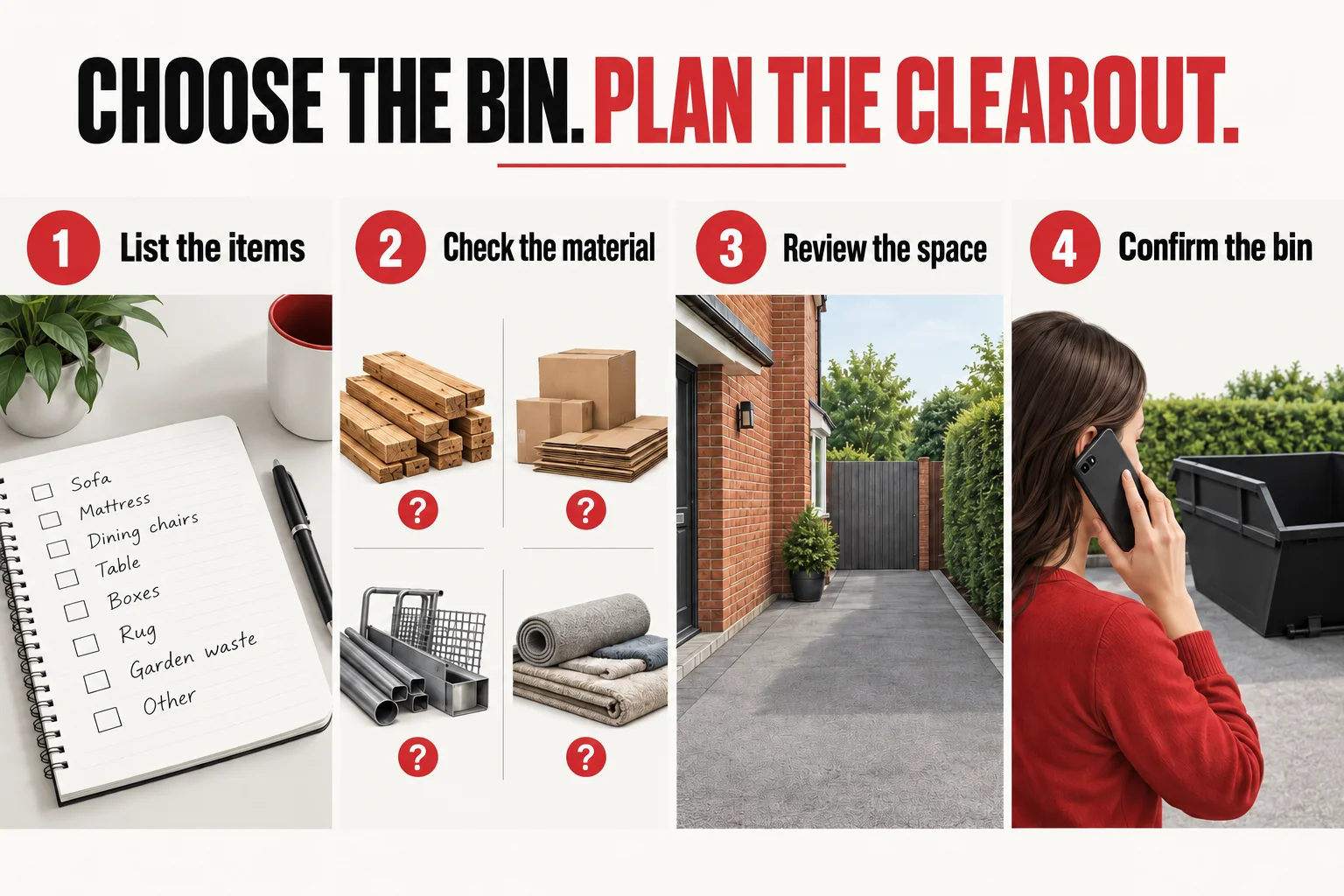
Start with an agreed location on private property, then send photos of the placement and the truck approach. Confirm the actual bin footprint, working space, surface concerns and collection route with Bin and Gone. Municipal road, sidewalk and boulevard rules must be checked separately; a driveway photo cannot establish a property boundary.
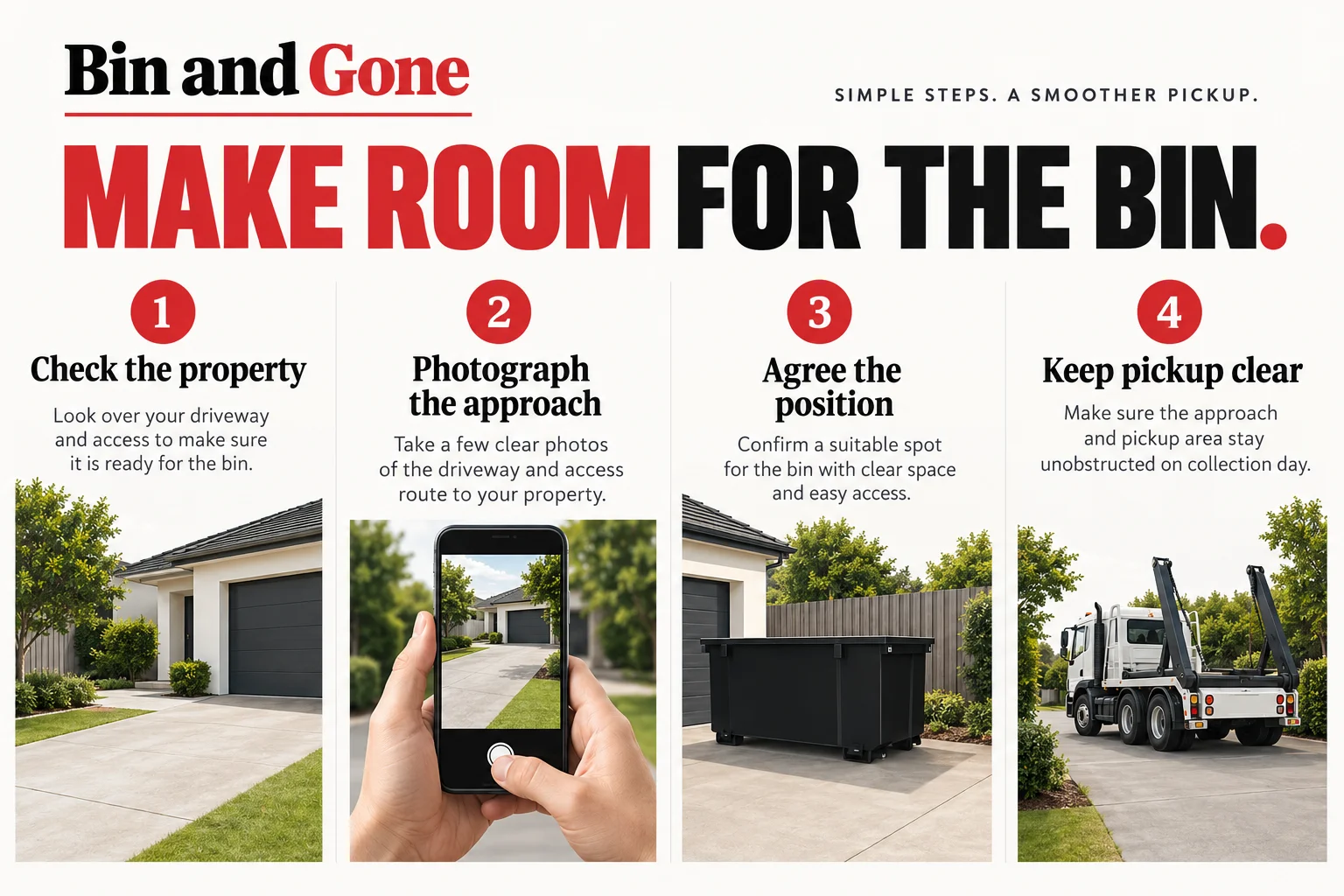
Read the infographic steps in text
- Check the boundary
Identify private property and any shared access.
- Photograph the approach
Show gates, slopes, branches and parked vehicles.
- Agree the position
Confirm bin footprint, access and surface concerns.
- Keep pickup clear
Preserve the route for the collection truck.
Check where private property ends
The paved area nearest the road is not automatically all private property. A sidewalk, boulevard or municipal road allowance may affect the proposed location. If the boundary is unclear, check your property information and ask the responsible municipality before proposing a position that extends beyond your lot.
For a rental property, condominium or shared driveway, settle owner or property-manager permission early. Explain how occupants will reach parking, entrances and common areas. Agree placement with the people responsible for that space.
Road placement has different rules
Clarington's current guidance says waste bins must not be stored on the road. Occupying its municipal highway, including sidewalks and boulevards, requires a road occupancy permit. Do not assume applying for that permit authorizes road storage or that a boulevard is automatically available for your bin.
Oshawa requires a road occupancy permit for work on or occupation of its road allowance and publishes a specific homeowner bin-request category. Regional roads fall under Durham Region's permit authority. Check the responsible authority for the exact address and proposal before arranging any use of public space.
Show the whole approach to the placement
One close-up of an empty driveway leaves important details out. Take a photo looking in from the road and another looking back toward it. Include the gate opening, nearby parked cars, overhead branches and any slope. Mention a narrow bend or a section of driveway that cannot be used by the truck.
Ask the team to confirm delivery and pickup working space. The bin footprint alone does not describe truck access. Profile illustrations are approximate comparisons, so they cannot establish clearance measurements or guarantee that delivery will fit.
- Photograph the entrance and proposed bin position.
- Identify gates, low branches and overhead obstructions.
- Explain slopes, soft edges or restricted turning space.
- Mention shared parking and anything that cannot be moved.
Discuss the surface before delivery
Mention new paving, cracks, decorative paving, a steep surface or soft ground. Ask whether the location is suitable and what preparation is needed. Parking a passenger car there does not establish suitability for a loaded bin.
Discuss any surface-protection arrangement directly with the team, including who supplies or positions it. This guide does not promise a damage-free placement or specify a protection system. Clear photographs and an honest description of the surface help the team assess the proposal before equipment arrives.
Leave room for people to use the bin
The closest position to the house is not always the most workable. Think about the route from the removal area, entrances that must remain usable and space for the agreed loading access. Ask about the actual bin's openings and loading instructions rather than planning around a diagram.
Keep public pedestrian routes and neighbouring access clear. Arrange a separate place for possessions you are keeping so they are not mixed into the removal pile. If helpers are involved, show them the approved material list and the agreed loading limits before the work begins.
Protect the pickup route through the rental
Plan parking for delivery and collection. A clear route may later be blocked by a vehicle, materials or another contractor. Tell everyone using the property which area must remain accessible, and update the team if conditions change.
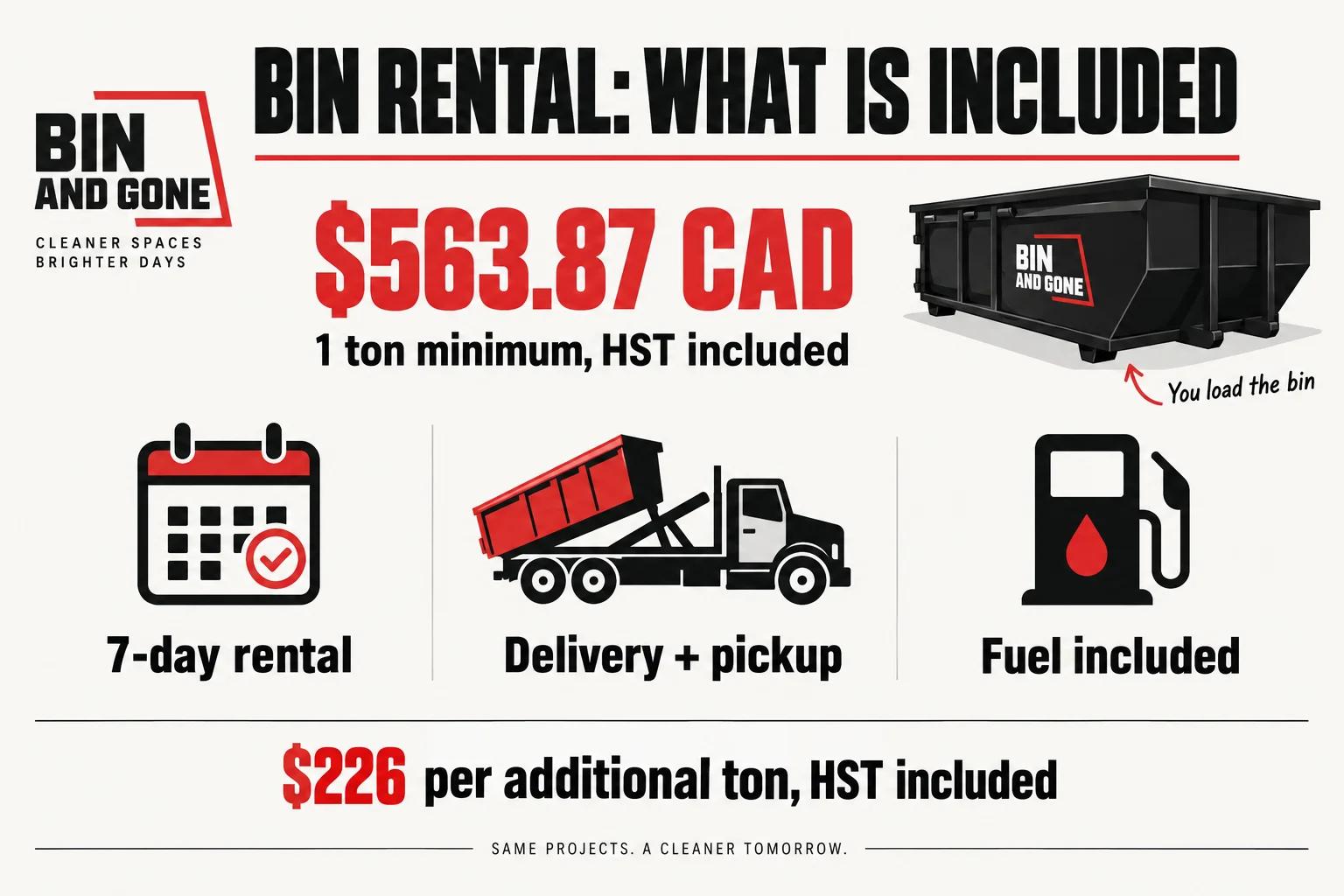
The approved rental is seven days, with delivery, pickup and fuel included. Confirm the requested dates and collection arrangements before booking. Extra time is an operational discussion, not an automatic extension. A prepared text draft is an inquiry until you send it and receive the team's confirmation.
Common questions
Can I put the bin on the road in Clarington?
Clarington's published guidance prohibits storing waste bins on the road. Review the municipality's current rules for the proposed location; a permit application does not make road storage acceptable.
Does an Oshawa road bin need approval?
Oshawa requires a road occupancy permit for occupying the road allowance and lists homeowner bin requests. Ask the City about the exact proposal and current conditions before arranging placement.
How much driveway clearance is required?
The team must confirm the actual bin footprint and truck working space for the site. No fixed clearance is established by the profile illustrations or this checklist.
Will the bin damage my driveway?
No damage-free guarantee is made here. Describe the surface and concerns, send photos and agree any preparation or protection arrangement with the team before delivery.
Sources and further reading
Official guidance provides planning context. It does not replace the materials, access, loading and booking details agreed with Bin and Gone.
- Municipality of Clarington: Occupying our Roadway
Road bin storage prohibition and road occupancy permit requirements covering municipal highways, sidewalks and boulevards.
- City of Oshawa: Road Occupancy Permits
Road allowance permit requirement, homeowner bin-request category and Durham Region's authority for Regional roads.